The highs and lows of casting the first dry fly of the season.
It’s hot today, unseasonably hot. It’s been a tough week at work. Usually, we have a bit of a transition period to get used to these midsummer temperatures but this heat wave at the end of April has come as a shock, at least to me. It followed the driest March in six decades and there’s not been much rain here in Sussex since. The landscape is parched but this is the weather that I have been waiting for. I haven’t cast a fly yet this year. In fact, I have barely fished at all for almost two years. It’s not that I’m bored or any less enthusiastic about fishing. It’s life! My partner and I welcomed our daughter to the world in July 2023 and we’ve both been focusing on the rollercoaster of parenthood and balancing it with work and everything else since her arrival. This has meant that a few things have taken a back seat for a while. This year though things have become more settled and we have both managed to carve time out of our hectic schedules to get back to the other things we enjoy. My focus in the colder months, while the river is off limits, shift to game shooting and deer stalking and I’ve joined a small local shoot syndicate which has kept me in the great outdoors but leaves little time for still water fishing and the opening of the river season in spring clashes heavily with my work in landscape gardening.
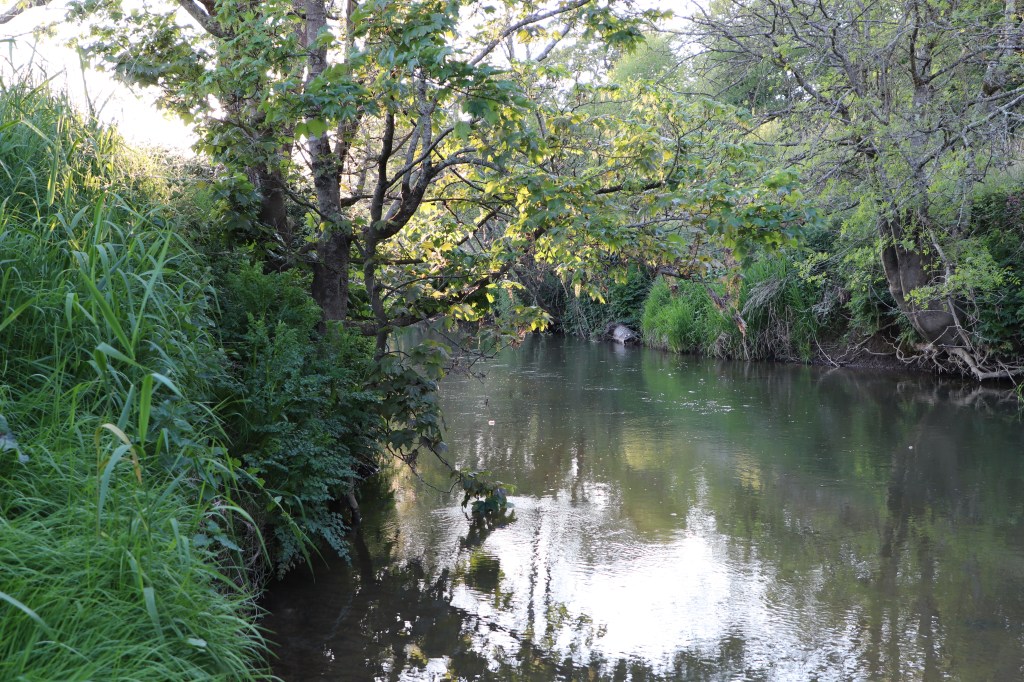
I used to be on the bank the day the season opened, eagerly throwing flies at unenthusiastic fish in a slightly swollen river and in temperatures that were reluctant to venture close to the double digits. These days I tend to be a little more patient. I’ve spent many dark winter hours dreaming of warm evenings on the riverbank as the sinking sun baths the lush banks in its golden light and sears fiery outlines onto the wings of clouds of bugs hovering over the slowly moving water. As the weather has warmed with spring merging into summer, I can feel my excitement building. The sub-surface methods that prove most effective in the winter months don’t hold a candle to the exhilaration of intently watching the first dry fly of the season bob lightly downstream over an enticing gravel bed, waiting hopefully, for that lightning-fast strike of a hungry brown trout.
When it comes to fly fishing there is, in my humble opinion, nothing to beat the challenge and reward of fishing dry flies. It is the very origin of sporting fly fishing, born on the crystal-clear waters of England’s chalk streams. Success hinges tentativeley on delicate presentation, stealth, quick reactions and at least a basic knowledge of the environment you happen to be fishing in. Even with all these pieces of the puzzle in place there are still a myriad of other factors that are stacked in favour of the wily trout.
The river I fish most often is not a chalk stream. The Rother bubbles out of the ground in Emshott, Hampshire before snaking its way across the border and into West Sussex and meandering south east to join the river Arun at Stopham, over thirty miles downstream. It is a spate river and as such spends most of the wet winter months as a swollen, turbulent mass of muddy water prone to bursting its banks and flooding the low-lying wetlands that border it. Where I sit today, quietly watching the gentle flowing water six feet below me has likely been underwater for much of the last six months. It makes me wonder how something as delicate as a trout fry can survive the tumult and go on to reach maturity, but they do. We stock the river on the Cowdray Estate a few times throughout the season with between two and three hundred fish to bolster the numbers but there is a decent population of hard fighting wild fish lurking shyly in these waters and if there is anything better than catching a trout on a dry fly, then it is catching a wild brown trout on a dry fly.
I haven’t put my rod together yet but the four sections sit next to me on the bank as I scan the water’s surface intently. Of course, there is always disturbed water on a river. As the course changes or flows over an uneven bed, around roots and logs and past overhanging foliage on the verdant banks. When you’re looking for a rising trout every ripple on the river suddenly becomes one and today is certainly no different. My eyes dart to every movement I see. In my experience the smaller wild fish snap at the surface splashing as they hit whatever morsel they’ve targeted. The larger fish approach more slowly and slurp the flies down before disappearing below the surface again, either way it’s easy to miss so while I study the surface of the river, I also keep an ear out for the tell tale sounds of movement.
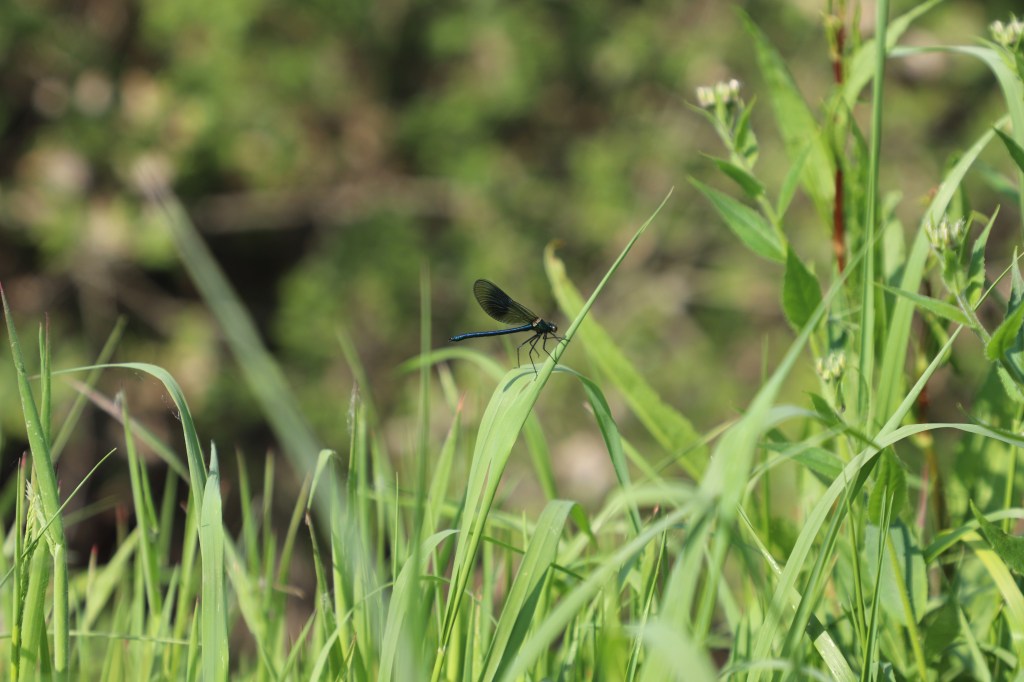
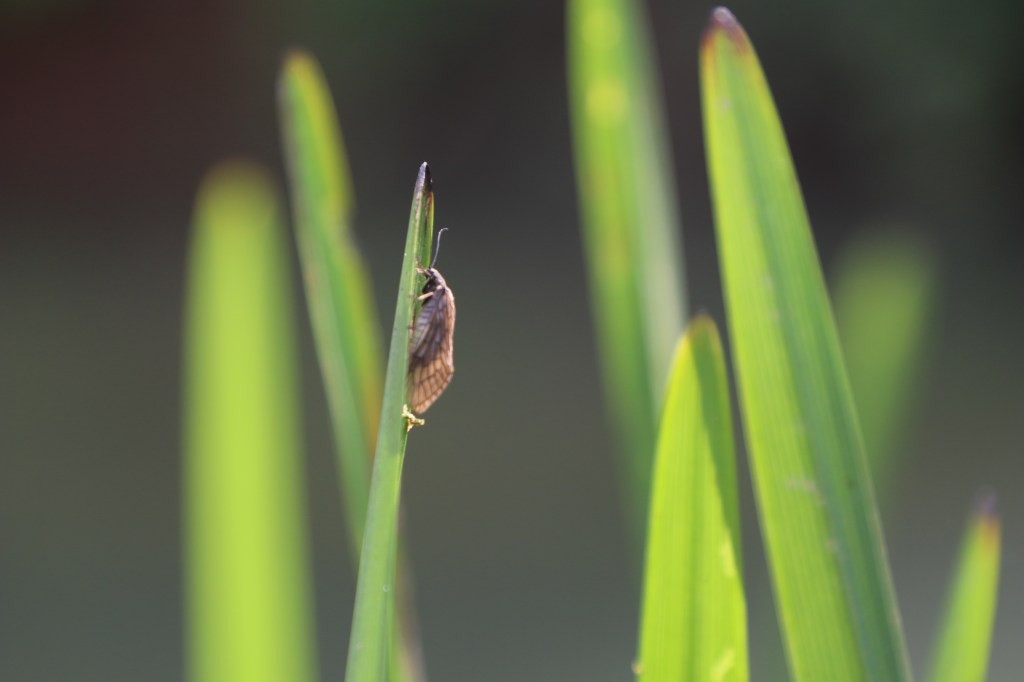
Although its hot the air isn’t as heavy as it will be in the humid summer months that are fast approaching, I’m slightly disheartened by the lack of bugs I’m seeing dancing lightly above the water. Perhaps my memory has become warped over the time I’ve been away from the river causing me to be overly optimistic. I’ve built this moment up for some time in my mind and the swarms of insects I’ve been expecting are nowhere to be seen. One large dark olive dun flies clumsily down river and tiny bugs too small to imitate race around the calmer sections of water but other than that it feels unusually quiet. I keep moving slowly up the river pausing at the promising pools and glides, keeping low so that my movements don’t spook any fish I haven’t yet seen.
Although the day started off still the afternoon breeze has now filled in. It’s well protected down here along the river margins but high above the leaves of a giant sycamore sway and shiver loudly in the wind. Occasionally a stray gust tumbles down through the branches and finds its way to the reedy banks of the river. I welcome it. As well as offering some cool relief from the burning rays of the afternoon sun it also provides other benefits. On days like today when there are no hatches to speak of on the river it helps to have something else on the menu and a gust of wind is often all it takes to blow a carless terrestrial insect from its home in the grass and onto the trout’s watery food conveyor belt. Beetles, ants, grass hoppers daddy long legs are, to name a few, all tasty morsels to a hungry trout at various times of the year and if the wind is blowing, they will know what to be on the look out for. Another useful advantage of the wind is the cover it provides. On a still day nothing moves so when your shadow passes over the water or your nine-foot fly rod cuts through air followed by a trail of fly line, there is a risk of spooking fish that are already looking up. Swaying branches and rustling reeds are a good way of masking your approach when stalking into a rising fish and I am using it today as I sit at the water’s edge and finally assemble my rod.
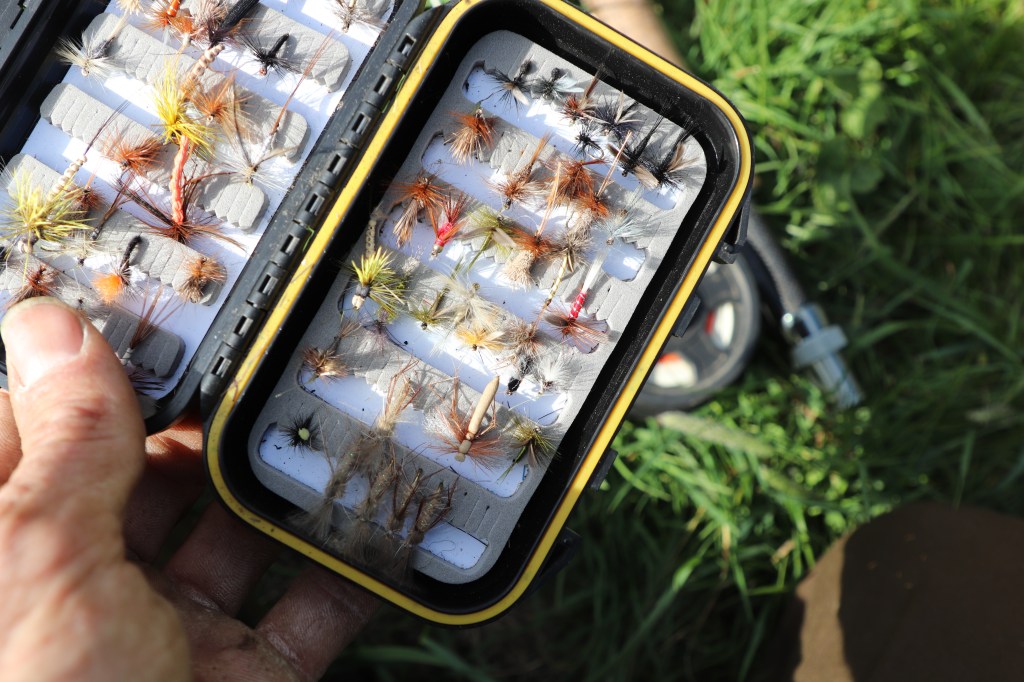
I open my fly box and, as usual when there is nothing of note hatching, I struggle to decide what to tie on. Up wings, emergers, spinners, sedges, caddis there is so much to choose from and I know that whatever I decide on I will end up doubting after the first unsuccessful drift. I’m stuck in this rut of indecision for what feels like forever when I’m wrenched away from the neat rows of intricately tied flies by the thing I’ve been waiting for. On the far side of the river and not even twenty feet upstream, a trout rises. I heard it this time and turned in time to see the tell-tale circle of ripples pushing out from deep run the fish is feeding in. I didn’t see it but I stay focused on the spot, minutes pass with my unblinking eyes starting to burn before it shows again. A wild fish!
It isn’t a big fish by still water standards but it is a beautiful wild trout. In the brief seconds it’s at the surface I can clearly see the dark back and speckled sides melting into a buttery yellow belly. Two effortless flicks of the tail and it’s out of sight once more. I didn’t see what brought it to the surface but as the one bug I have seen was an olive dun I rummage through the box to find something as close to that as possible. I have one left and it’s a little worse for wear. Clearly this isn’t its first rodeo and I hope that’s a good sign as I squint my eyes and struggle to control my shaking hands enough to get the 6X tapered leader through the tiny eye of the hook, occasionally firing a glance under the far bank where I know the fish is holding. Finally, I sinch the knot tight and let the leader and fly swing out over the water’s edge and dangle, bouncing in the light breeze that funnels down the river.
It’s a bit of a tricky cast. Directly upstream from where I saw the rise a thick shoot of bramble is hanging into the water, snaking back and forth in the flow, the thorny end is heavy with a clump of dead leaves and aquatic growth. This will get in the way of the fly as it drifts down the run and over the trout below. Adding to my frustration is the thick vegetation behind me obstructing my back cast. Never mind, where there’s a will there’s a way. I strip line of the reel and make a few sharp false casts to get the line through the eye at the tip of the rod and drop the fly gingerly on the water jut in front of me to see how it floats. I’m ready! Rather than cast over my head I swing the rod out in front of me and cast up and down the river. The tight loops roll out in front of me and as I power the rod forward for the final time, I let the line go and watch as the line straightens and the fly falls gently to the surface a small ring of ripples fading into the water around it. It’s a good cast but just shy of where I want it to be. I let it drift down unmolested before pulling it from the water and loading up another cast.
Focus! I put a bit more power into the second cast and it lands perfectly, just ahead of the overhanging bramble. The fly swirls around the tangle of detritus and right over where I think the fish is laid up, head into the current, and eyes searching the surface above. I hold my breath as it drifts over the shaded dark water. It passes with no attention and as I’m about to load the rod up ready for another cast, I see movement. The fish doesn’t rise aggressively, taking a more cautious approach instead, watching the fly drift by from just below the surface before turning broadside to the current and following it downstream. One quick burst of speed, mouth open and it sucks the fly down. Inhaling sharply, I lift the rod tip to set the hook and for a split second the line comes tight, the water swirls and to my utter dismay the fly sails past me and into the tangled mass of vegetation behind me. Cursing loudly, I look around for someone or something to blame. Of course, there is no one there and nothing logical I can pass this off on. It’s me. I’m rusty, out of touch, and now that fish is well and truly spooked. It doesn’t know what just happened but it certainly won’t be making that mistake again. Not today anyway.
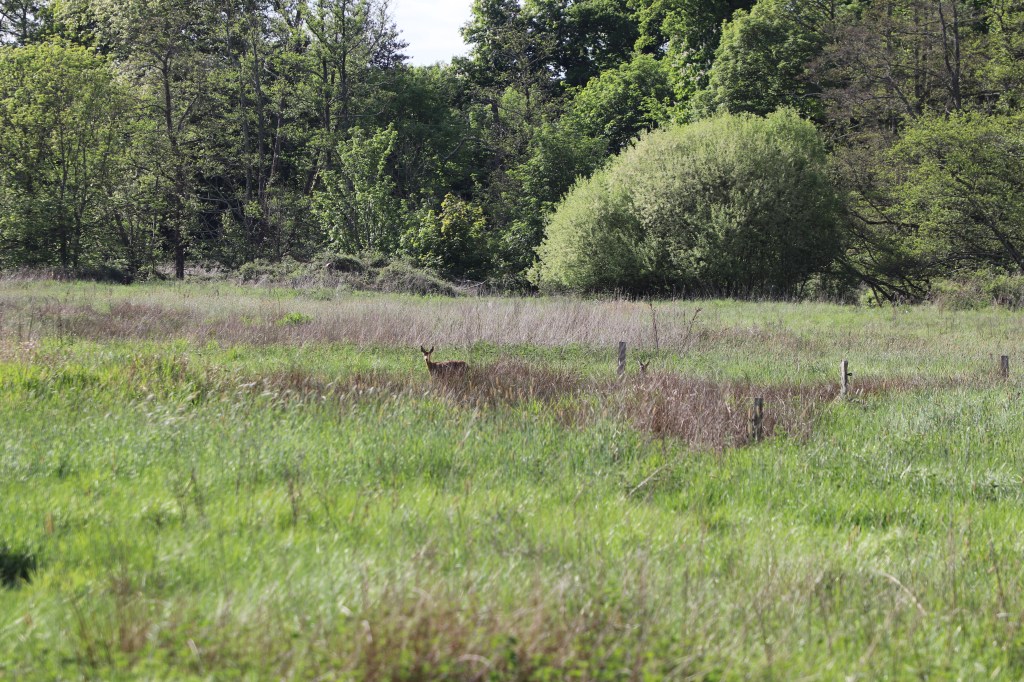
After a minute of sulking, I recompose myself and look for where my fly is buried deep in the brambles on the steep bank. Unable to reach it and with no amount of line tugging able to dislodge it, I snap the fly off. Clearly the hook was not the issue. I gather my kit and frustrated, head off upstream to try again. Walking quickly through the flood meadow I spook a roe buck from his bed in the long grass. He wears an impressive crown of antlers fresh out of velvet and as he bounds away, barking hoarsely in alarm, a doe pokes her ears up. She is in no rush; her swollen belly tells me the arrival of her fawn is imminent. Swallows chatter brightly, stooping low over the swaying grass and high above a buzzard, soaring effortlessly on invisible thermals, cries eerily.
The tapestry of nature around me has a calming almost meditative effect and my sullen mood soon dissipates. The beauty of this quintessential riparian landscape is, for me, a huge part of the appeal of fly fishing and I feel lucky to be a part of it for these brief moments. I slow my pace as I approach the next promising stretch of peaceful water. A thick canopy of tree cover shades this stretch, which on a sunny day, is just what I’m looking for. I’ve already decided on the fly I’m going to switch to after the tragic loss of my last olive dun and as I place my pack on the sandy bank a fish rises at the top of the shallow run. It is a bigger fish than the last one which leads me to believe that it’s a stocked fish. I quickly open the fly box and go straight for the G and H sedge pattern for no other reason than they seem irresistible to surface feeding trout. It is buoyant and easy to see which works in my favour too. I quickly tie it on and inch my way down the bank to the edge of a reed bed. My boots sink in the wet sand sending bubbles of gas fizzing to the surface. Stripping line off my reel I glance around for any obstructions that might hinder my cast. The canopy of hazel is high above me now and well out of reach of my rolling line. The fish rises again at the head of a riffle and I keep my eyes on the spot as I load up the rod ready to deliver the first cast.
It falls short but isn’t close enough, I hope, to spook the wary fish. I let the fly drift back a short distance retrieving line as it comes, before making my second cast. Much better. The fly lands in the slow water ahead of the gravel bed and gains momentum as it gets closer to the faster water. I force myself not to blink so I don’t miss the take. Barely breaking the surface, the fish rises and slurps the fly down and as it turns its tail slaps the surface noisily. Holding the fly line and lifting the rod tip I set the hook confidently. The line comes tight once again and the surprised fish races for the sanctuary of the deeper water. I start counting my chickens and then nothing. The line pings back in the water, slack. How? What is happening? Pulling the leader out of the water as it floats past me, I see the problem. My fly is gone. Snapped off. Cursing myself for the second time today, I inspect the bare tip of the leader.
I stare dumbly at the water playing with the frayed line in my fingers before checking the time. I have to go. This short session is over. As frustrated as I am I can’t be annoyed. It’s a promising start even with no fish brought to the net. You can’t win them all and after so long out of the game I shouldn’t be surprised that I’m going home with nothing on the board. Just to be out here in the peace and tranquillity of the country side more than makes up for it. As I traipse back toward the truck, I’m reminded of the words of fly fisherman and author Gary Lafontaine, “The whole thing about fly fishing is that it’s supposed to be fun. If you have more fun not catching fish on a dry fly than catching fish on a nymph then fish a dry fly.” This rings true today. I’m sure I could have tied a streamer on and dragged it through the pools or trotted a nymph over the gravely bottom with more success but would I have enjoyed it as much as I did crouched on the bank, eagerly watching the bristly dry flies bobbing downstream? Something tells me not and as I strap my rod into the rack on the truck, I’m already planning my next visit to the river. I know it will all come together eventually and, after all, if it was easy maybe more people would be doing it and I for one am glad they aren’t.
 The Wayward Sun Blog