On the hunt for the elusive mullet on the fly on England’s south coast.
If it is possible to define a person by the time of day during which they are most comfortable, then I am undoubtedly a “morning person”. I am an early riser and enjoy those brief moments of calm at the start of the day when the world around me is for the most part still deep in slumber. The morning brings with it the promise of fresh starts and new adventures and today, that is exactly what I’m looking forward to. I’ve sprung to action even earlier than usual this morning and as I drive south on deserted roads I have the feeling I might be the only person left on earth. The sun, barely peaking over the eastern horizon, has long illuminated the cloudless sky and as I take another sip of extra strong coffee while keeping one eye on the road I’m bubbling with excitement.
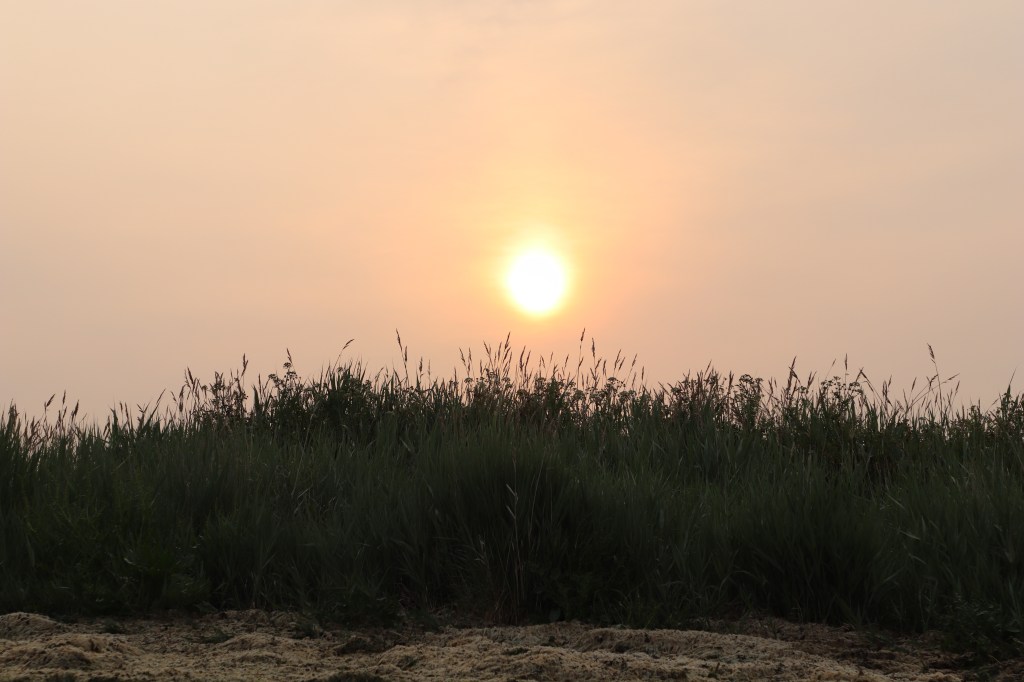
I’m heading for the coast, specifically to Chichester harbour, a marshy, natural haven who’s tidal channels twist and turn from the busy Solent, north, to its upper reaches about five miles inland. The species I am after and which I have thus far been spectacularly unsuccessful at landing, is the mullet, of which we have three varieties native to our coastal waters, any of which I would be grateful to finally catch. It isn’t the first time I’ve made this pilgrimage to the coast this summer. Far from it. My latest fishing obsession is one that has, at times frustratingly, been a long time in the making and it’s not always early starts and rising with the sun. You see, in my so far unsuccessful sorties to the coast the one thing I have learned without a doubt is that far more crucial than the time of day is the state of the tide and today the rising tide just so happens to coincide with the rising of the sun.
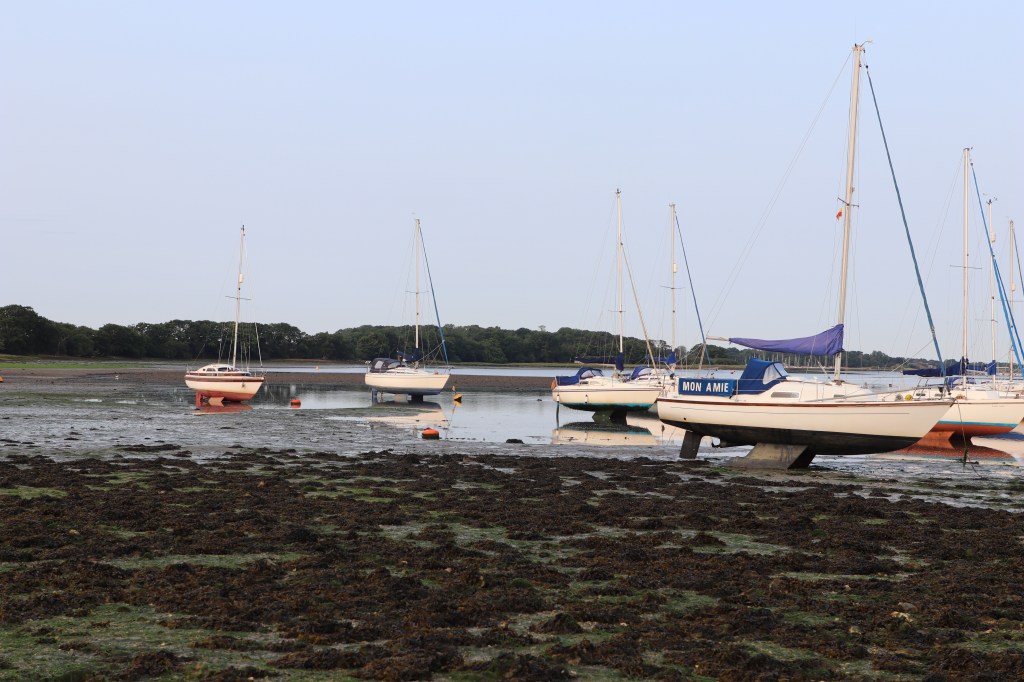
I arrive at the sleepy harbour just as the tide is on the turn. I’ve avoided the morning traffic and got here before the crowds of people that will invariably head the same way as the day draws on. For the preceding six hours the tide has been ebbing, the water draining rapidly out of the harbour basin. Now it is once again starting to flood. The exposed mud and shingle before me will soon be under water and with every foot the tide rises there is another foot of newly accessible sea bed the schools of hungry fish will be eager to feed over.
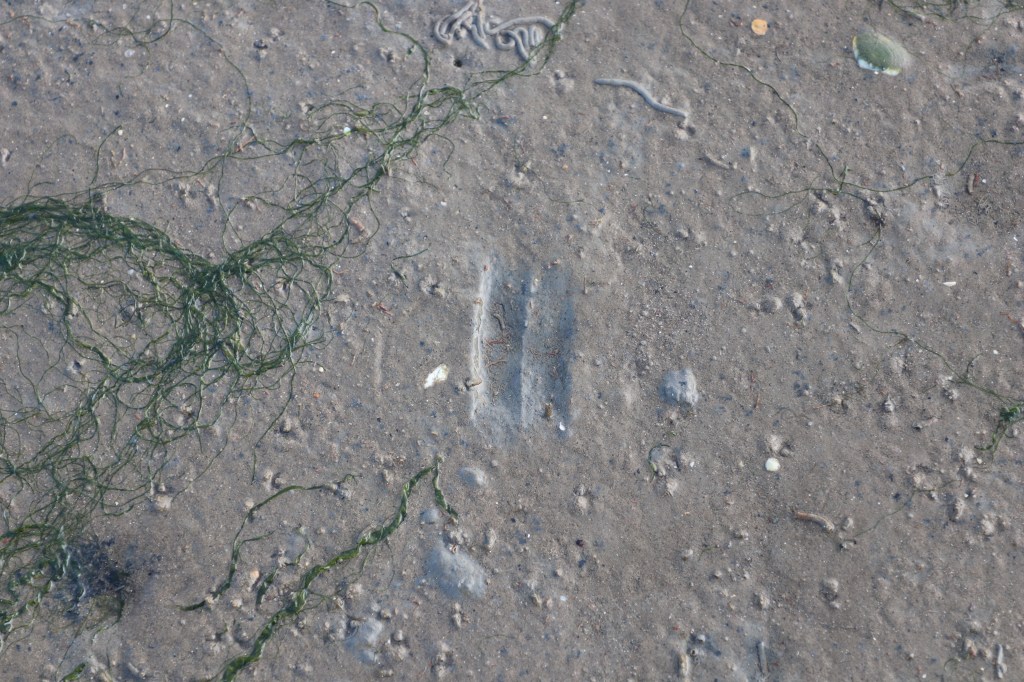
Walking above the high water mark the hazy morning sky is filled with the melodious warbling of skylarks hovering above the surrounding grassy pastures. The occasional raucous call of gulls rudely interrupts them and as I make way closer to the low waters edge, the crunching of gravel underfoot is harsh and unnatural in the still air as it echoes across the flat water, punctuated by the distant, sharp whistle of an oyster catcher. Carpets of bright green sea moss and rows of slightly dried kelp cover the gravel and mud, deposited as the last tide retreated to the sea. Soon the smooth flint pebbles give way to a sticky, pungent mire. Walking becomes more laboured as, with each step, my feet sink deep into the black mud before I can pull them squelching out again. It is here that I see the first evidence of feeding mullet but it is not from the water as one might expect. Etched into the silt around me are tell tale “mullet scrapes”. They look as if someone has dragged two fingers through the mud and they are caused by the hard mouths of the fish as they snuffle through the ooze in search of the tiny invertebrates they gorge on .
This is encouraging and I am reassured as I once again check the flies on my leader. From all that I have read and seen discussed on the subject by the likes of Colin Macleod in his book “Mullet on the fly” and on social media forums, it is best practice to fish two flies. I have tried three but this has always ended in disastrous tangles which have taken me precious minutes to rectify while fish feed happily around me. Today I have opted for a blue Romney’s sand shrimp on the point tied to the shank of the hook on a flexi worm above it with ten pound fluorocarbon. This is much heavier tippet than I am accustomed to using but the closest I have come to catching one of these fish in my previous attempts was quickly ended by a snapped leader and I am taking no chances this time. Despite their relatively benign appearance there is no doubt that mullet are powerful fish. I have heard them described more than once as the “British bonefish” and while the two species do share some similarities I can’t help but feel that this is something of an unfair misnomer for the humble mugilidae.

Both the bonefish and the mullet spend much of their time feeding in shallow water, perfectly evolved to hunt the sediment below for the crustaceans and invertebrates that make up much of their diet. Their sleek silver bodies and broad tails are also make them both capable of blisteringly powerful, reel screaming runs that test an anglers nerve. However, in my limited experience I have found bonefish to be aggressive feeders and very obliging when presented with a fly. The same cannot be said about the mullet. These sharp eyed and nervous fish have turned down hundreds of my offerings, either cruising nonchalantly past or spooking off the moment the fly enters their realm. As with most fish your best chance is to find them when they are feeding competitively and their usually cautious nature is overcome by the desire to eat. Today, perhaps foolishly, I am feeling confident.
My first scan of the murky water does not reveal any fish but I don’t let this bother me. I keep moving along the water’s edge, covering ground while keeping my eyes fixed on the water. It doesn’t take long before I see my first fish. They are singles, moving with a purpose, eyes ahead with no sign of slowing. I know better than to waste my time casting at cruising mullet but that doesn’t stop me. I drop the flies right in their path and wait a few moments before stripping line gently, almost imperceptibly. As predicted the mullet show not the slightest interest, one even spooks into deeper water leaving a cloud of silt suspended in its wake. Not to be outdone and more determined than ever I carry on trudging slowly against the flow, stopping periodically to scan the glassy water before me. On my last trip down I foolishly left my sunglasses at home which made the job of spotting fish almost impossible under the glare of the sun and rippled surface of the water. Today my polarised lenses reveal everything that swims or drifts by but I don’t waste anymore time casting to fish that clearly have somewhere to be, a destination to which I have obviously not been invited.
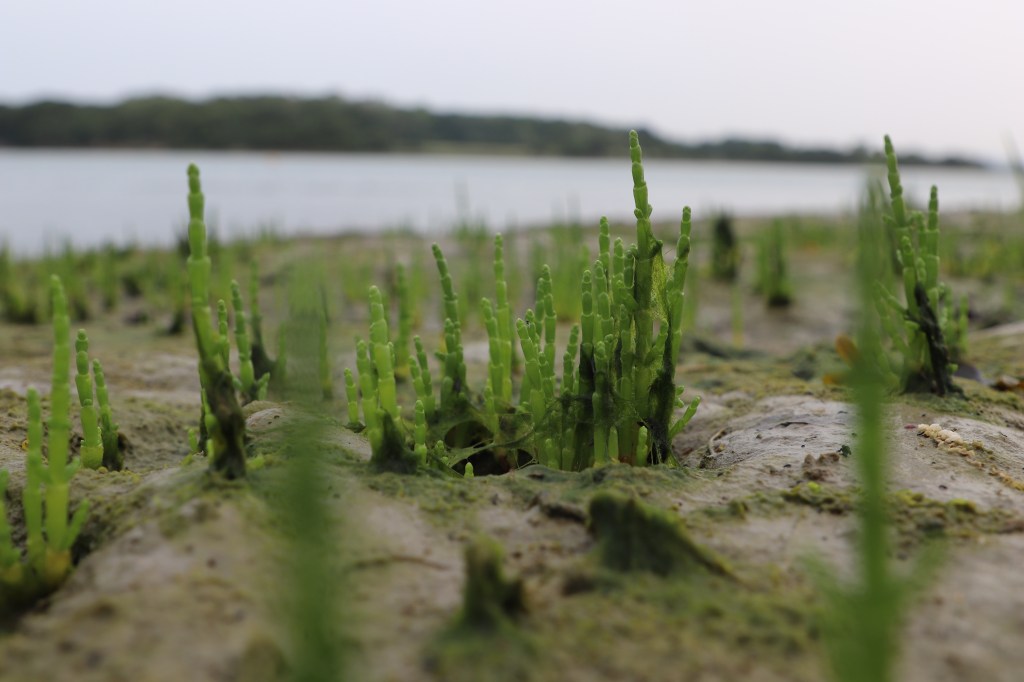
The so far gently sloping basin I have been traveling on eventually makes way to an elevated area of mud flats cut through by channels carved in the softer silt by the receding water. Succulent patches of newly sprouted samphire add vibrant colour to the dark mud and, loathe to go home empty handed once again, I take a break from my march to pick a few handfuls and shove them into my pack. With my newly gained altitude I am able to see slightly further. Ahead of me I spot some nervous water, the occasional splash and slivers of dorsal fin breaking the surface betray the fish’s position. Reluctant to crawl through the pungent mud I stoop low and slowly make my way toward the promising movement.
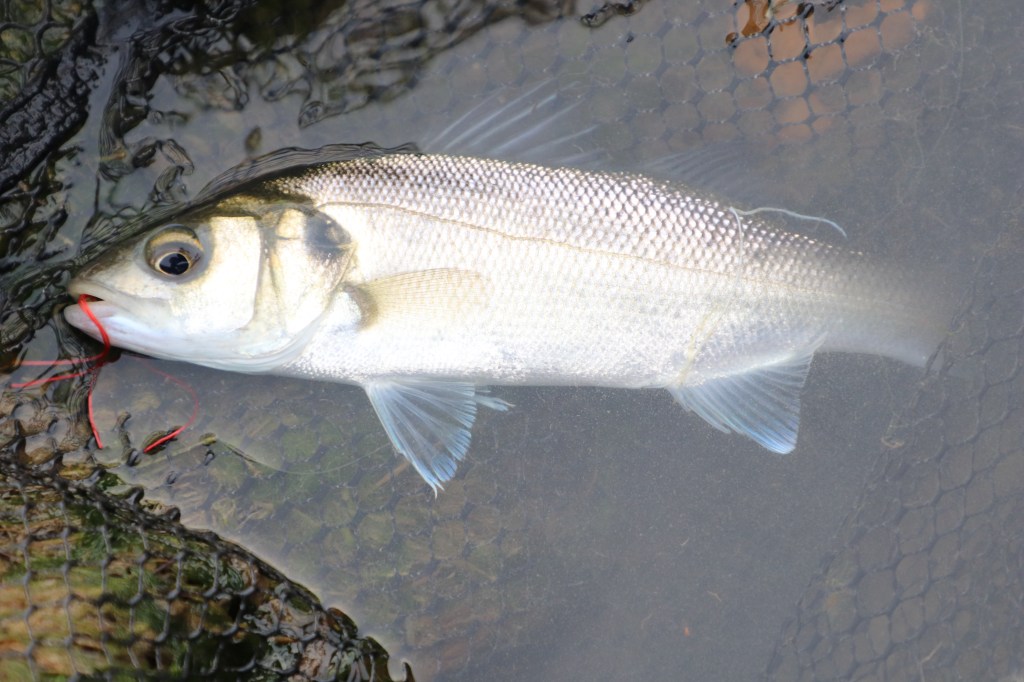
Once within range I strip line from my reel and pile it on the floor at my feet, making sure there is nothing for it to snag on. My first cast lands up tide of my target area and I let the flies drift over the swirling water, stripping line in slowly as they travel back toward me. Suddenly and by now unexpectedly, the line comes tight, rattling and bending my rod. I set the hook with a tug on the fly line inhaling sharply. Is this the moment I’ve been so eagerly waiting for? I can feel that whatever is on the other end of my line is no monster but the water swirls as several fish spook from where I’ve hooked up and mullet are definitely among them. There are none of the hell for leather runs that I’ve heard about and it doesn’t take long before I discover the culprit is a small “schoolie” bass. I’ve caught several of these pocket sized predators now and while the first couple were an exciting new species to add to the list, they have become somewhat tiresome, seeming to beat my target species to the fly with annoying regularity. I get the tiny silver scaled predator to the net in short order and waste no time in unhooking it and sending it on its way.
Spurred on by the obvious presence of fish I continue moving slowly along the elevated mud flat and its not long before I find another group feeding aggressively in the shallow water. Tails and fins once again break the surface as the fish bump and jostle to gorge on whatever it is they have found in the thick mud, oblivious to my approach. I make a cast uptide of the fish and watch as the line drifts quickly into the frenzy. When I am sure the fly is well and truly in the melee I gently strip the fly line doing my best to mimic the speed and movement of a tiny helpless mud shrimp. At first I think I must have hooked some weed or a clump of oyster shells as the line stops and the rod tip bends but a sudden shake tells me otherwise and I firmly pull the fly line, fighting the urge to set the hook as I would with a trout snatching at a dry fly. Whatever is on the end of the line is clearly upset at this assault and immediately makes a run for deeper water, stripping line through my fingers and the eyes of the rod as it goes.
For long seconds I have no control of the fish’s screaming run and soon the last of my fly line disappears off there reel and down into the murky water of the harbour. Now into my backing I palm the reel in an attempt to slow the freight train I seem to have hooked. It begins to work and the fish slows down. With my heart racing I try and regain some line, a few turns of the reel is all I can gain as the fish holds deep in the strong current. I stumble into the water in order to gain some more line, reeling as I go. Eventually the fly line emerges from the water and I get it back to the tip of the rod before the fish wakes up again and powers into another unstoppable run. With careful pressure I manage to redirect the fish into the shallower water up stream of where I’m stood knee deep in the mud and water. Splashing clumsily back to shore I clamber up the muddy shelf and get my first glimpse of the flat headed grey form of a mullet holding position against the incoming tide. It is a good fish which only heightens my anxiety. The stringy red arms of the Flexi worm flail in the water above the fish telling me that it has taken the shrimp pattern. I look to the heavens and beg the fish gods to make sure my knot and both hooks hold under the pressure. Moving more easily on dry land I close the gap and gain more line before the fish sees me and spooks into yet another blisteringly quick run.
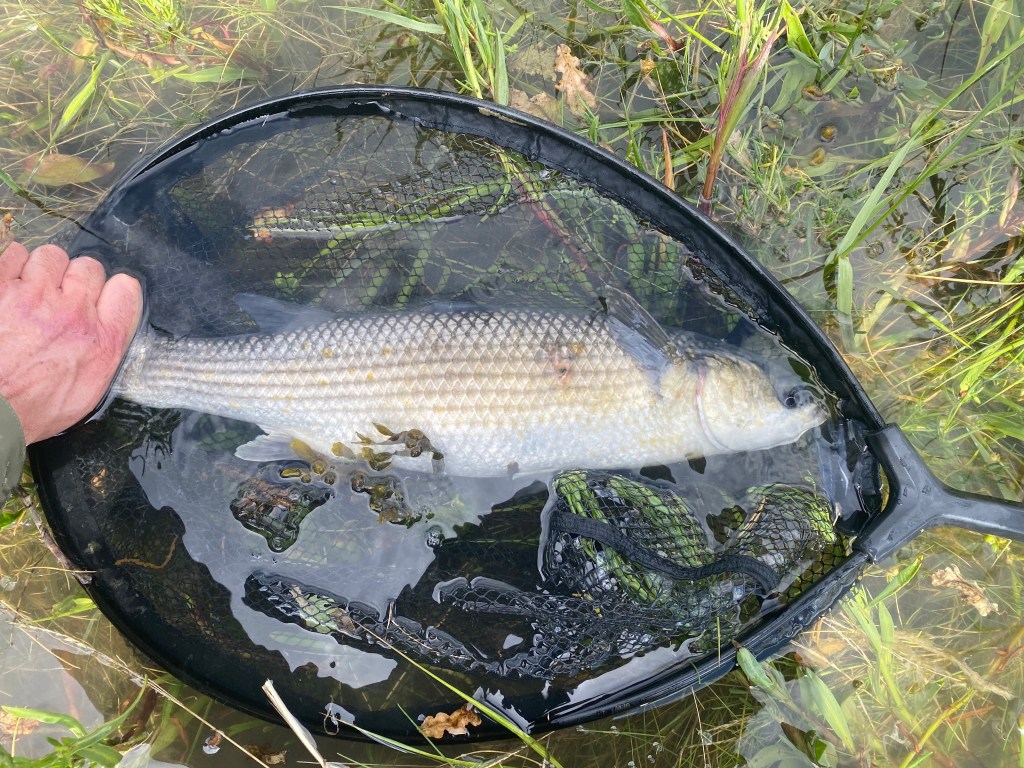
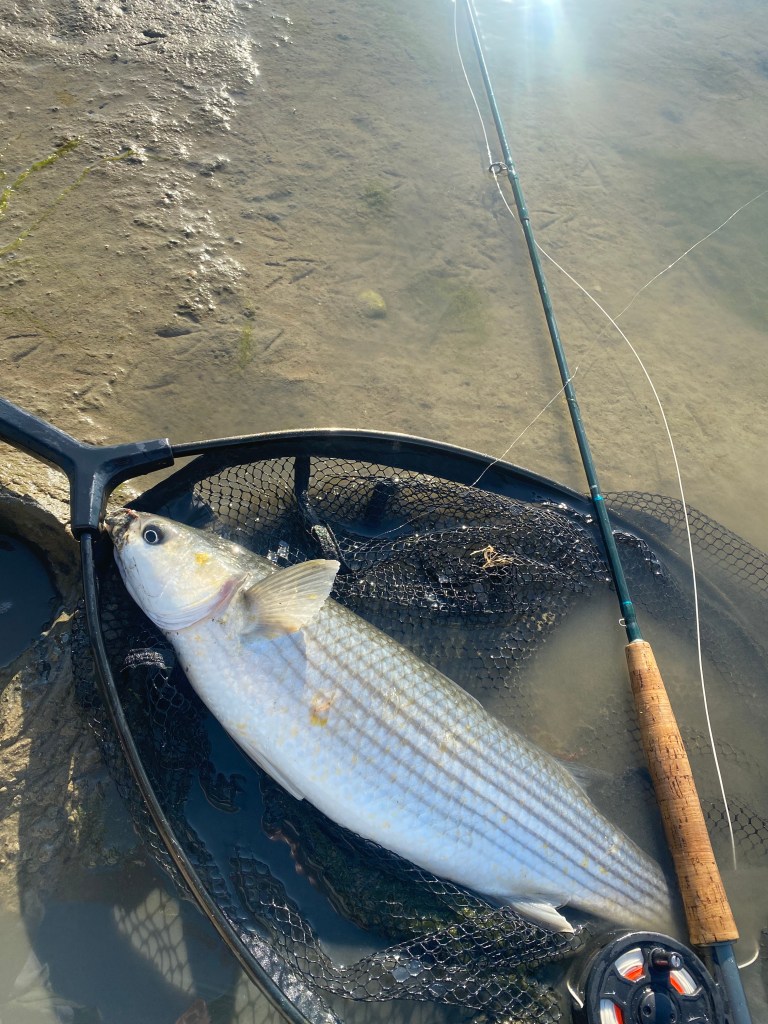
With nervous breaths and calculated rod movements I mange to slow the fish more quickly this time. The grey ghost is finally tiring and I am able to start getting it closer to the shore. Rather than staying deep it swims just below the surface which gives me some relief as I don’t have to worry about the many sharp obstructions that litter the bed of the channel. Slowly but surely I am able to gingerly persuade the fish to the bank and I crouch low and slip my net into the water. With one last attempt at freedom the fish bolts seaward and my heart sinks. Long minutes pass before I am able to once again get it within reach and I waste no more time in getting the net under the tired grey lump, securing my trophy. Over ten minutes have past since I hooked the fish and I am elated finally able to breath relieved breaths while shouting loudly in celebration to the still quiet harbour. It might not quite have been a fish of a thousand casts but it has certainly been one of many hundreds and as my heart rate returns to normal and my breathing slows I carefully pull the tiny fly from its hard mouth and take a brief minute to admire the fish that has occupied my mind for two seasons and given me a real run around today.
Both the fish and I slowly regain our composure as I hold it below the cloudy surface of the rising water. Strong shakes of the tail in my hands tell me the big bellied brute is finally ready to swim back to the depths of the harbour to console itself. I release my gentle grip of its tail and as I watch it swim off into the tide I thank it silently for giving me a memory I will never forget and a reward for the many hours I’ve spent slipping and sliding through the mud, flailing my rod through the salty air. I start the slow walk back to my truck which I have now wandered well over a mile from, the muddy footprints I made earlier have long disappeared below the rising water. I am hot sweaty and caked in mud but I couldn’t be happier. I must check the tides and my schedule for next week when I get home, I’m sure I’ll have time to get back down here.
 The Wayward Sun Blog